
Take 2.
On Sunday over coffee, I started describing my solar journey in great detail. Rich quickly fell asleep despite the dark roast he was guzzling.
Lesson learned. I’ll skip the details and cut to the chase.
Why Solar?
Going solar is expensive. And many don’t like the look of the panels on their roof. Who would?
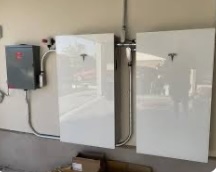
Plus, I have a bunch of new hardware and conduit running along the house. Not ideal.
So that’s the why not, let’s look at the why.
Savings. That’s the biggee. We want to save on electric and we will.
Back-up power. That’s the rationale for the battery. It would be nice to run the heat, the stove, the lights and the garage door when the power goes out. I no longer carry a house key. If the garage door doesn’t open when I hit the button, I’m stuck outside.
Buy v. Lease
I chose to buy my panels and battery. If you lease, you make regular payments and you miss out on incentives. More info here from solar.com.
Additionally, you can take out a solar loan. This way you will eventually own the panels but you’ll pay interest along the way.
To me, it seemed worthwhile to buy outright and enjoy the savings.
Savings?
When the sun is out, your panels will generate electricity and you’ll save money by not having to buy that electricity from your electricity provider. Pretty simple.
I installed my original 22 panels in April 2023. Between April and December 2023, I saved $2,500. That’s on average $277 per month. How’d you like that off your electric bill?
In 2024, I saved $2,900. That’s $241 per month. 2024 was less sunny than 2023, but I’ll spare you the play by play.
There are definite savings.
Quick Aside
2 words. Hot Tub.
I love my Hot Tub. I hop in 2 or 3 times a week in the winter and it is great after golf on a cold spring morning. But those who say heating a hot tub costs about $1 per day don’t live in New England.
In prior years, my wife loved the monthly mailing from National Grid that showed us how much less electricity we were using than our neighbors. One month, I put it up on the fridge.
Once we got the hot tub, this ended quickly.
I hadn’t been interested in panels on my roof before, but when my bill skyrocketed, things changed.
Choosing
Both solar companies that I worked with were helpful in deciding how many panels, placement, etc.
They take a copy of your usage history and recommend a number of panels to meet your savings goals.
I got to weigh in a bit on positioning and running cables but there really weren’t a lot of decisions to make.
Round 1
April 2023 was round 1. I installed 22 panels at a cost of about $29,000.
In 2024, when I submitted my taxes for 2023, I got $9,000 back in Federal taxes and $1,000 from state. While I had to put up the whole $29,000 when I purchased, I got back about $10,000 so my net cost was $19,000.
With about $2,900 in electric savings each year, the system pays for itself in 6.33 years.
My equipment has a 25 year warranty, so I’ll get at least (25 – 6.33) 18.67 years of free electricity.
Seasons
It’s New England. Hot in the summer. The sun peaks through my window at 5am and it’s light until 9pm.
I hate winter. Sun up at 8am, sets at 4pm. Cold weather and short days. That’s when we old folks head south.
Guess what this means for solar?
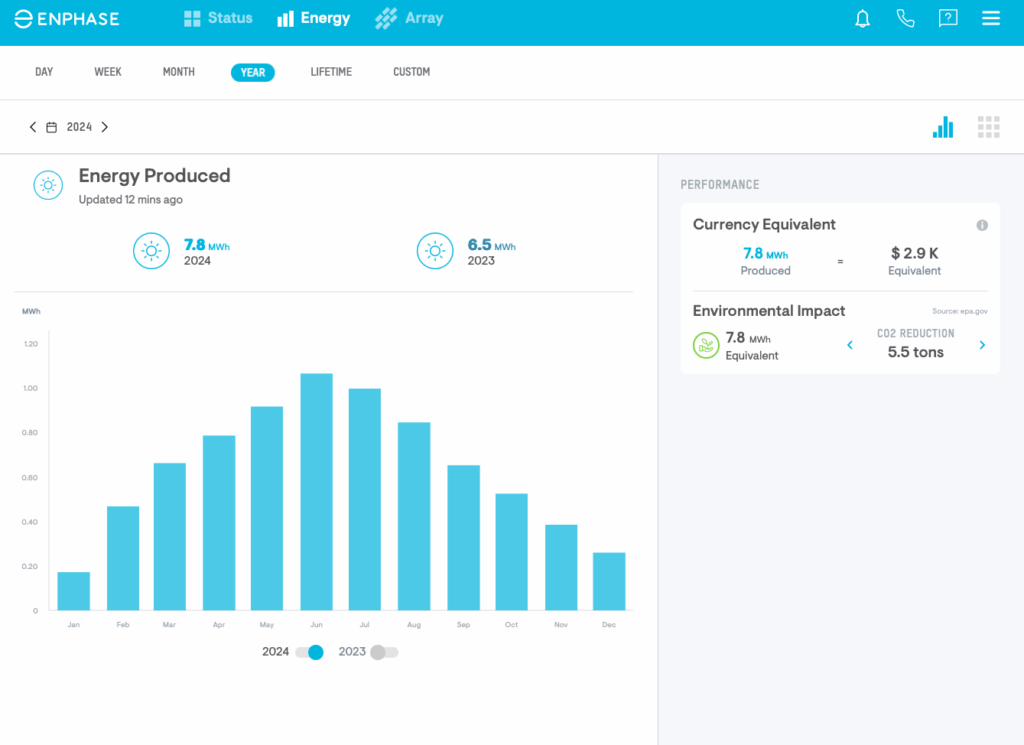
In the summer months, I’m generating over 1,000 kWh of energy per month. In Jan and December, I generate about 200 kWh.
My electricity needs vary as well. The hot tub needs a lot of electricity to keep the water at a balmy 104 degrees when the outside temp is 20 degrees.
In the summer when it’s 90 degrees and I turn the hot tub down to 80 degrees, my power needs shrink.
Net Metering
I know, but bear with me for 30 seconds.
My home uses power from the solar panels. If I produce more than I can use, the excess gets sent to the grid and I’m compensated for that via a program called net metering.
My electric company uses net metering. Some don’t. Look it up before you buy.
During summer months, I use less than I produce and credits build. Come October, I produce less than I use and start eating into the credits.
Around December or so, I’ve used up the credits and I start having to pay an electric bill until April rolls around and I start producing more than I use.
With net metering, I don’t have to worry, the electric company handles this.
Round 2
In 2023, I added a mini split unit to heat part of the downstairs. It’s more efficient than oil, but it uses a lot of electricity. And it is using more in the winter at the same time my hot tub is gorging on electricity.
I decided to add 5 more panels and while I’m at it, let’s add 2 batteries so that I can power the house when the grid goes down.
5 New Panels
I added roughly 20% more panels but I increased production by about 25%. Panels are more efficient than they were even 18 months ago. And the section of roof I put them on gets a lot of sun in the summer – we’ll see what happens in winter when the sun is lower in the sky.
My goal (and the solar company helped with the math) is to cover 100% of my energy costs.
Battery
I bought 2 Tesla Powerwall 3 batteries. Together, they hold about 26 kWh of power. That’s enough to power the home for about 24 hours.
If I shut some things off, I can last a couple of days on that.
And remember, if the sun is shining, the batteries will fill up during the day. Even in the winter, I’ll generate some power. So battery back-up could be indefinite.
Batteries don’t do much for savings for me.
Because my electric company participates in net metering, I’m well compensated to send power back to the grid. If I weren’t, it would be a benefit for fill the batteries during the day and discharge power to my home at night to avoid having to buy/sell power to the grid.
But, that’s not saving me money.
The batteries give me back-up.
I’m also part of the connected solutions program at my electric company. During periods of high demand, they’ll pay me to use some of the capacity in my batteries. The Tesla app handles this for me so I don’t have to do anything.
For this, they’ll send me a check for about $1,600 per year.
Wrap Up
Thanks to Rich, I’ve mostly stuck with the facts.
I can say with confidence that my first 22 panels saved me money. I saw the zero dollar electric bills most months and the lower bills in late fall. I’m certain they’ll save me $2,900 per year for at least 25 years and likely more.
I expect my 5 new panels will generate more power per panel and will pay off even sooner.
My batteries will provide backup power in an outage and the $1,600 in connected solutions income will pay for them in a little over 10 years.
Final Thought
What do you expect will happen with energy prices?
Demand seems to keep going up. We buy more stuff that uses power. Electric vehicle use is growing. And don’t get me started on AI. That eats power.
With higher demand, I expect higher prices. And as demand grows, we’ll need to upgrade the aging power grid. We’ll pay for that in increased energy prices.
I shelled out about $45,000 after incentives for 27 panels and 2 batteries. I’ll get that money back in monthly electric bill savings in less than 10 years at current electricity rates. And I’m insulated from further price increases and I have indefinite battery backup in case of an outage.
Great info, and makes tons of $ sense, my only issue remains that what if you don’t stay in the house where you’ve invested in all this equipment?
Good comment Mike. That’s an important consideration – while there is anecdotal evidence that adding solar improves home prices, there are many home buyers who would flat-out refuse to even consider a home with panels on the roof. My opinion is that at best, it’s a wash. If I sell tomorrow, I’m out $55,000. Now, you’ve met my wife and seen her garden. Where would you place your bet?