
This morning I noticed that Kontoor Brands was up 20%. Wow!
I’m sure most folks are saying “Who the Hell is Kontoor? Never heard of them.”
The few of us who know Kontoor likely know because in 2019, VF Corp, the maker of Vans sandals, and Timberlake and Northface outdoor gear decided to split off some of their underperforming brands. Sounds good, right? Let’s see how that went.
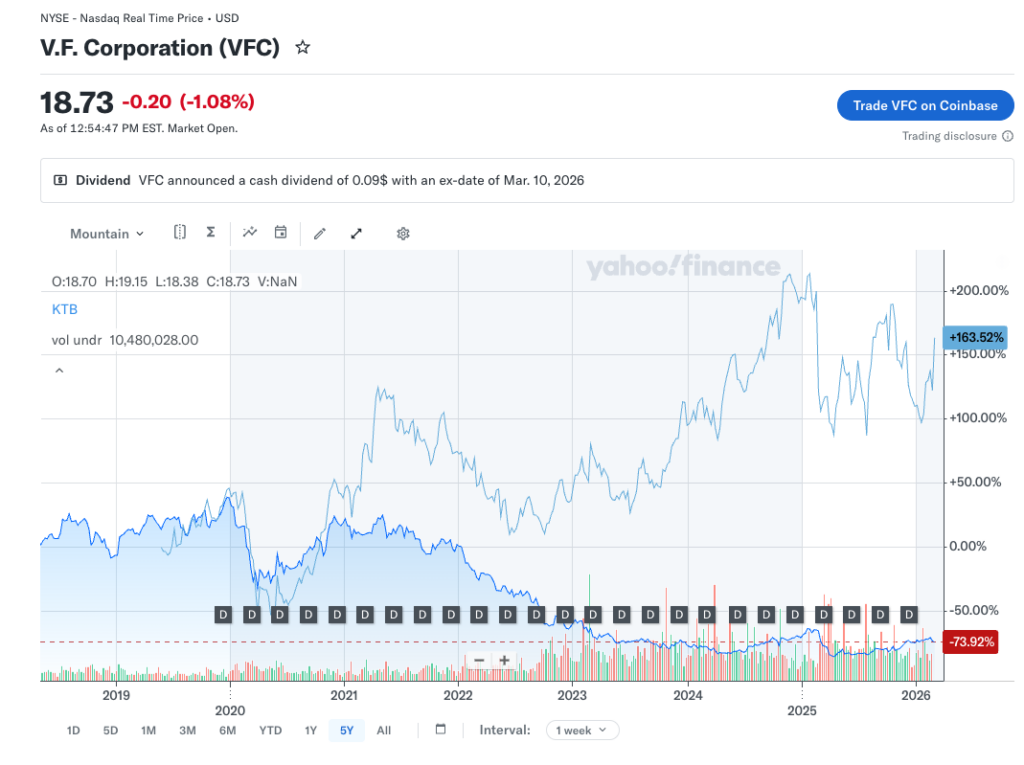
Since the split, Kontoor is up 163%, VF Corp is down 73%. Good call.
I’m a still-angry ex-shareholder.
Well?
So seeing Kontoor’s price pop got me thinking about VF Corp, which got me thinking about the stocks I’ve sold. I know, it took a while to get here. Hopefully we’ll make it worthwhile.
Deciding to sell is a big event for me. That’s because deciding to buy is a big event. Occasionally I have an impulse buy, but most often I do some research, which includes analyst reports and building a thesis. So, by the time I click buy, I’m committed.
Which means even after they’re gone, I still wonder if I should have held on.
…and the Answer is…
There is no answer.
VF Corp and I parted ways in July 2023. It’s my 2nd biggest loser and I’d be down even more if I had held on. It seems like I was right to sell, but what will the next 5, 10, 15 years bring? VF Corp has been around since 1899. It must be doing something right.
2018 Rebalance
In 2018, I was starting to think about retirement and I attended a seminar, which ended up being mostly about annuities. While I wasn’t interested in an annuity, I was intrigued by the thought of transitioning from wealth generation to wealth protection. That’s a big change and hadn’t been something I’d given any thought to.
At the time, I was heavily invested in growth companies – Apple, Amazon, Visa, Starbucks, Booking Holdings, Disney. After the session, I sold a huge chunk of all 6 of these companies and moved to more conservative investments. This was in October and November of 2018.
I felt like a genius when the market pulled back in late 2018. that feeling went away quickly as everyone except Disney recaptured their previous highs in 2019 and then went on to even more gains.
Spreadsheet
As is often the answer for me, it was time to revisit my sales spreadsheet and see what has transpired.
Whirlpool, VF Corp and Pinterest are my top 3 biggest money losers. All have continued to slide after my sales. And my sales were 3 years ago so that’s a lot of sliding.
But Intel has exploded. I have mixed feelings here. Intel cut their dividend and consistently overpromised and underdelivered so I sold. Major thesis change.
Selling looked like a smart decision for several years until they brought in a new CEO and then the US Government took a 10% stake. If the government that regulates trade has an ownership stake in your company, do you think you’ll have a competitive advantage???
Just goes to show, you never know what will happen.
And the story’s never over til we sell. What will happen with Intel next?
Old Dominion Freight Lines is another example. I love the company, but I sold late last year due to what I perceived to be instability in the sector with tariffs and inflation. I sold and the company’s stock price is up 57% since. I had a feeling this would bite me in the a$$.
Wrap Up
To me, it’s important to keep score. That’s how I learn.
The companies that I follow regularly and I’ve held for many years are my biggest winners. That’s Apple, Amazon, Netflix, Visa… They’ve all had pullbacks that have tested my faith, but my conviction in the business of each of these has always been strong.
My sales in 2018 may sting a bit when I look at what I could have had now, but it was the right strategic move for me. If I had stayed put and we had had some lackluster market performance for a few years, this could have jeopardized my retirement.
We don’t know what’s coming next. While 3 double-digit down years in a row or 10 years of almost no gains are unlikely, they are possible. We need to be prepared. And for me, moving to fixed income and high-dividend equities ensured I’d have cash in case the market pulled back.
For the others, it comes back to conviction. My thesis was wobbling with VF Corp, Whirlpool and Pinterest. I was probably right to sell. I also owned some REITS whose thesis had changed, so I sold. They’ve since recovered and gone on to new highs.
But Old Dominion, I should have recognized the challenges as a business cycle challenge. Great companies, survive down-cycles and thrive in a recovery.
It’s hard to tell.
On any given day, there are professional, Harvard MBA analysts who are experts in their sector – some buying Old Dominion, some selling.
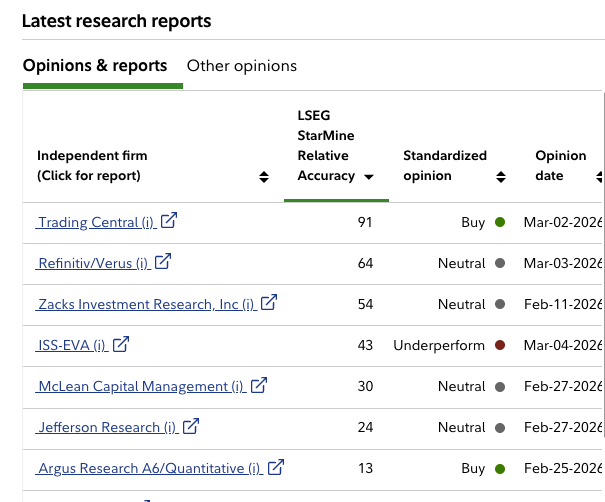
So, while it sounds like there is no good answer here, this exercise reinforces a few things for me.
- Own many companies. Sometimes we’ll be right, sometimes we’ll be wrong. Companies that we’re right on can double many times over. Companies that we’re wrong on can only go to zero once.
- Research before hand and create a thesis for why we want to be owners. Invest in companies in which we are committed. Stick with them unless the thesis changes.
- Don’t make emotional decisions. This is harder than it sounds, but #1 and #2, along with a sound asset allocation strategy can make this easier.
Good Luck.