

In posts like Protect Yourself, I talk about ways to keep safe from the internet hordes that are trying to steal or money. I’ve got plenty of tips under the Protect Wealth tab.
Phishing
The scams all start the same way. The scammer jiggles something pretty in front of us and hopes for a response. Any response.
Scammers play the long game. The fake invoice from Paypal is not the golden egg. It’s just a way to see if we’ll engage. They don’t want $499.99 from us, they want everything we’ve got.
A response tells them they’ve come across someone who is willing to engage. No response tells them to move on. Guess which works best for you?
My mom’s friend Hector would get angry. “I’m going to call them and tell them…” He’s the perfect target.
Who’s Doing the Phishing?
This is a really important point.
We imagine that the scammer is a lone guy with a cell phone. Probably an out of work programmer with some tech skills who is living in his parent’s basement.
This is their greatest weapon. Making us under estimate them.
Many of those sending the texts, emails or phone calls work for huge multi-national corporations. These corporations have a nice building in an office park. Hundreds of workers commute here every day. There is an HR department and a training department that keeps them up to date on the latest techniques. And most importantly, there is a huge technology department.
These corporations have the ability to send millions of text messages and emails. They buy lists from legitimate marketing companies. And they buy information about us on the dark web.
And let’s face it. There is more information than we’d care to share available for free on the web. Facebook, Instagram, you name the site, they know an awful lot about us. Do a google search. You’ll be shocked.
Today’s Example
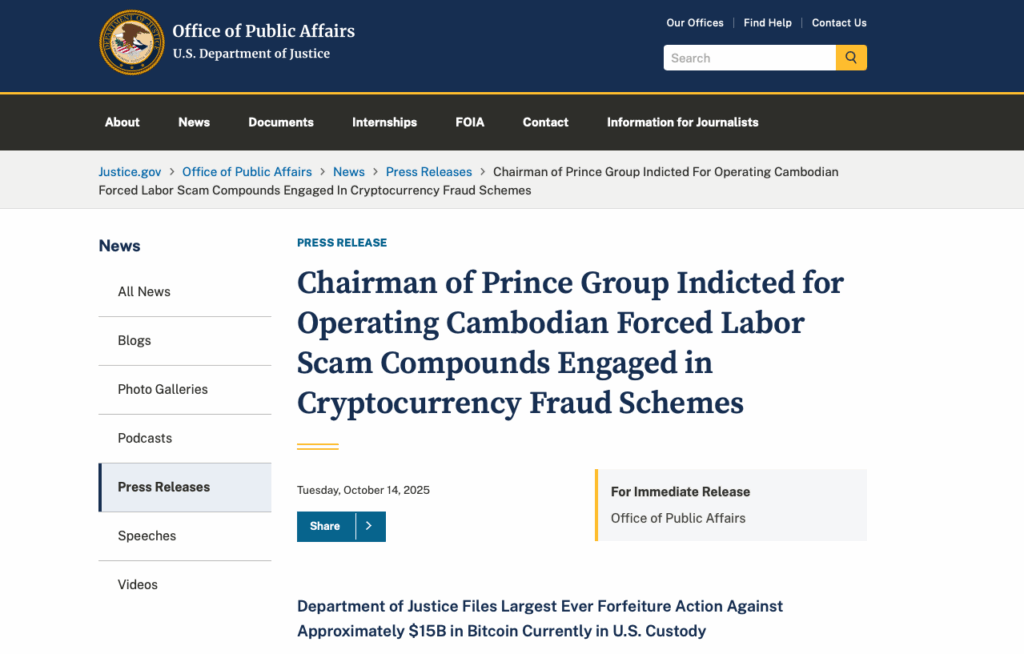
Who is the Prince Group?

Seriously. Check it out here.
There’s that nice building. And what a professional web page.
And they’re tricky. Under business units, they don’t even mention financial crimes…
CEO
He seems nice.

What Happened?
Read it here at the 1440.

Wrap Up
Here’s the take-away.
We’re not dealing with amateurs.
We’re out-manned in terms of numbers, technology and resources.
We need to be smart.
Not responding always works.
It’s so simple. If we don’t engage, they can’t get any more information. And information is what they need to butcher the pig. If they already had this, they wouldn’t bother. So don’t answer.
But, having worked on a fraud helpline, I know that one of the weapons these scammers have is that they catch us at weak moments. They offer something that’s attractive, whether it’s the threat of an unpaid bill or an invitation to claim a prize, we can be caught off-guard.
I almost fell for it yesterday. I got a very professional looking email from AAA saying click to claim my free roadside assistance gift. I’m a AAA member and this is the kind of stuff they do, right? Then I moticed they addressed me as bmcgurn63 – my email address not my name. And then I checked the sender email and it was not from AAA.com, or anything like it.
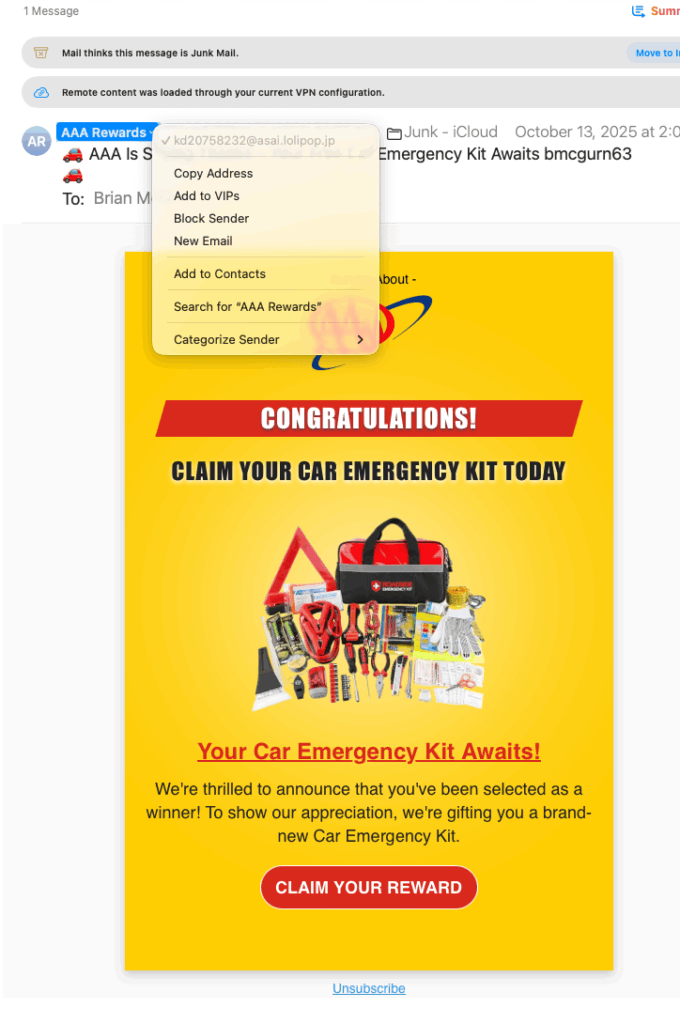
We think we’re too smart, and then one simple mistake lands us in the middle.
But there are things we can do to protect ourselves. I’ve got 3 pages of posts here. The biggees are
- Don’t answer – let unknown calls go to voicemail, and don’t respond to unknown texts
- Strong passwords, different passwords for every site, and a password manager
- Use a VPN to protect your internet traffic and to hide your identity
If you’re already in it, The government’s website identitytheft.gov is a great resource.
You are no match for Chen “Vincent” Zhi and his resources. Be careful.