
When investing in a company, or a mutual fund, time matters. We know the stock market is volatile. This year it is up almost 11%. That’s awesome, but remember when the market dropped 18% when tariffs were announced? And after the tariff excitement faded, it popped 30% to get us to where we are today.
This year isn’t that unusual. It happened in 2020 when COVID hit. It happens fairly often, but thankfully our memories are short.
Old Dominion
Today, I was refreshing my thesis on Old Dominion Freight Lines (Ticker: ODFL). Don’t feel bad. I’m going to the TPC in Norton later to watch the LPGA tournament.
But let’s spend a few minutes on ODFL. We move a lot of stuff around. ODFL is one of the premier carriers and I got interested a few years ago when I was thinking about the companies that benefit from all the online shopping we do. ODFL popped onto my radar. I took a look and bought a few shares.
That was October 2017. ODFL is up over 300% since then. My investment beat the S&P 500 by over 150%.
Buy Buy Buy
In 2024, I had some cash and I wanted to put it to work. I thought ODFL would be a good opportunity. I bought 100 shares. The price dropped and I bought some more.
Bummer
I’m agonizing a bit over both subsequent purchases. One is down 21%, the other down 7%. I hate to lose money – don’t you?
I understand why. Tariffs, inflation, fear of recession, some lingering supply chain issues. It’s a tough time for transport, whether you’re UPS, CSX or ODFL.
I like ODFL. I’m holding, but I’m not happy.
I’ve also decided to update my thesis to see if my reasons for buying still hold.
Cyclical Businesses
The term makes me laugh.
Investopedia says:
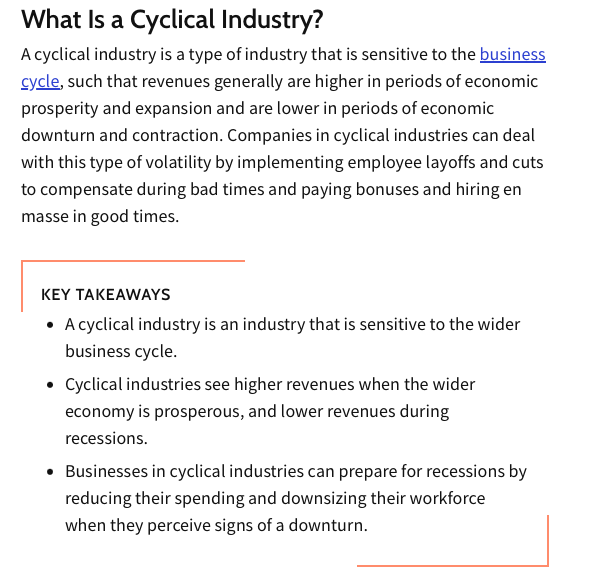
I’ve reviewed the 64 companies in my portfolio, and they all seem somewhat cyclical. I’d be excited to find one that is booming whatever the economic cycle looks like. That’s a winner.
If you find one, please post the ticker in the comments section.
ODFL is in a bit of a down cycle. Is this permanent?
Analysts
ODFL is down more than the industry is down. That’s bad. And analysts hate to back a losing horse, so the reports are quite negative.
Inflation is a big reason. But inflation will not likely be with us for the next 20 years.
Truck driver shortages. That’s interesting and something to watch. I’ve seen this a number of times with other companies. Let’s hope Elon and Waymo figure out the whole self-driving thing.
But nothing dramatically changes my original thesis. We still move a lot of stuff around and we’ll need companies like ODFL that do it well.
I’m not betting the farm, but a small position seems to make sense.
Dollar Cost Averaging
This basically means making regular purchases to prevent buying all shares at an all-time high. A 401k is a great way to do this. Buy a few shares with every pay check. Buy some high, some low and they average to a pretty good price.
With ODFL, I bought some in 2017, and some more 7 years later. While that’s not a traditional every-month dollar cost averaging strategy, I can still look at my average cost on ODFL and see that I’m ahead.
My average cost is $129 per share. The price today is $149. I’m ahead!
Wrap Up
It would be hard for me to hold on to my 2024 shares given the drop in price and the murky future if it weren’t for the 2017 shares that were still ahead.
But 14 months in a down cycle for the transportation industry may not be a great representation of how ODFL performs as a business.
And that’s what we all struggle with. We hate to lose money. We often sell too soon because we don’t want to lose more than we’ve already lost.
But 13 months, or even 13 years, can be a short time for a business. ODFL has been around since 1934. That’s 91 years.
Our investments often need time for their potential to translate to profit. I’ve found one of the best ways for me to stay committed and to remain patient is to buy more shares of companies that I love that have appreciated in value.
This is another reason to add more to winners. We’re already ahead. If we still love the business and the p/e hasn’t gotten ahead of itself, maybe put some more money here? Even with a pull back, we’re still ahead.