

This morning I read on CNBC:
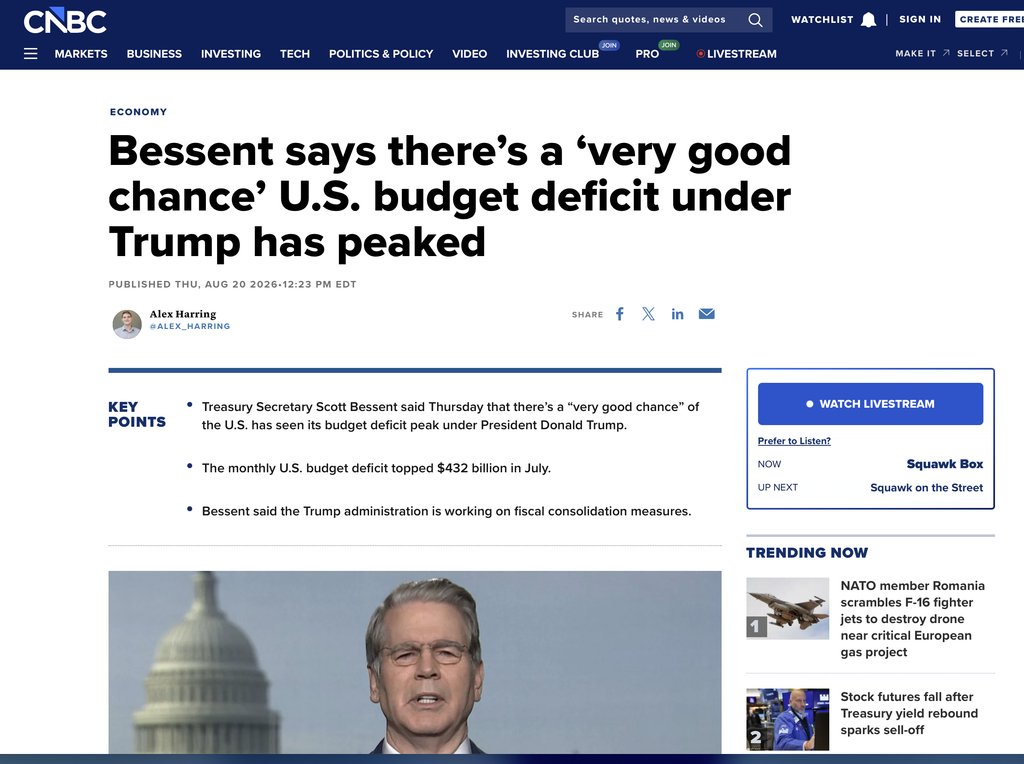
This in response to questions about the US Deficit crossing the $40 Trillion mark.
Here’s what US Debtclock tells us:
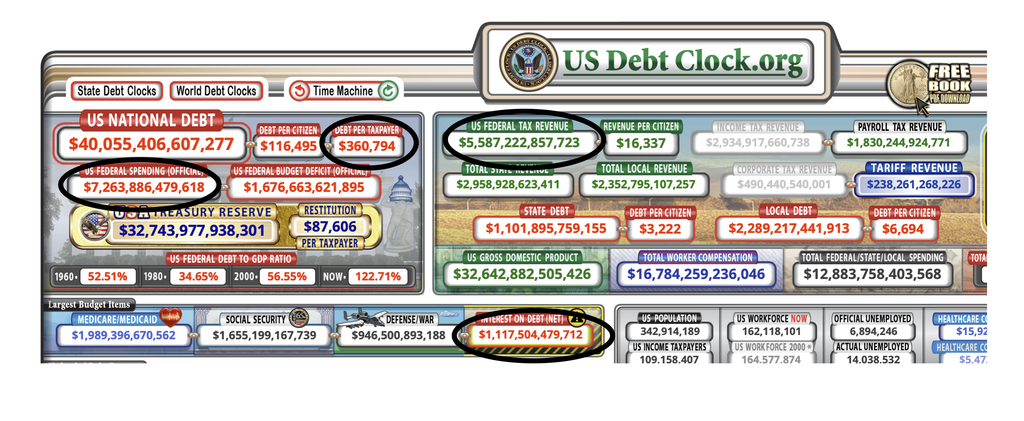
More about the debtclock in a sec, but let’s test drive Bessent’s comments first.
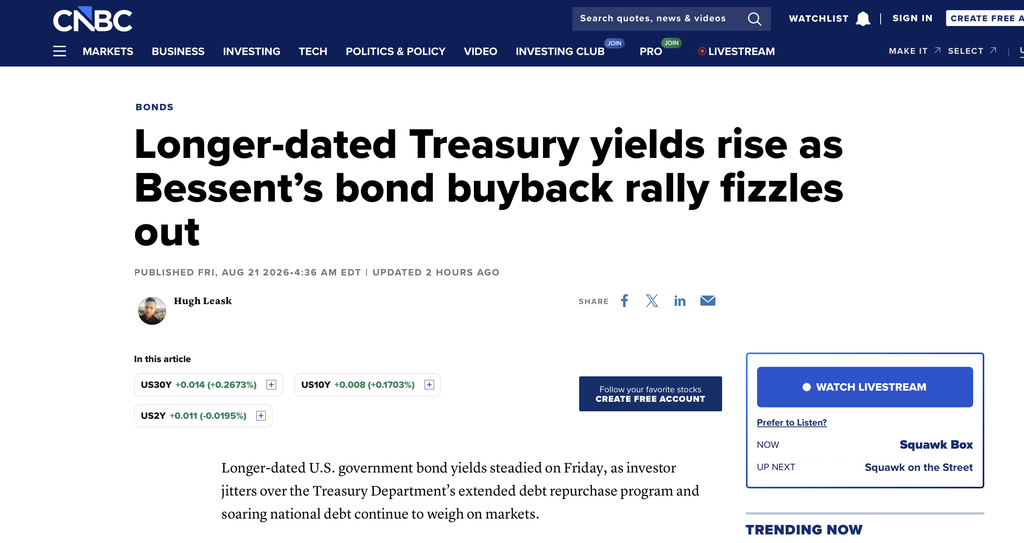
It seems to me he has a track record of inconsistent performance. Rather than strolling through historial evidence, let’s take a look at CNBC today.
Check out this.
or this.
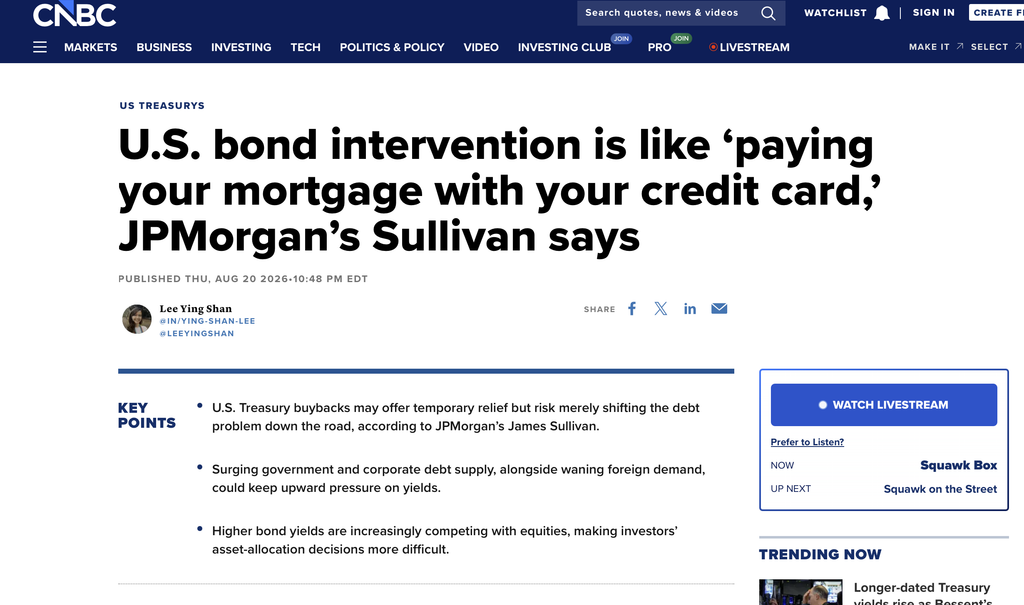
or this
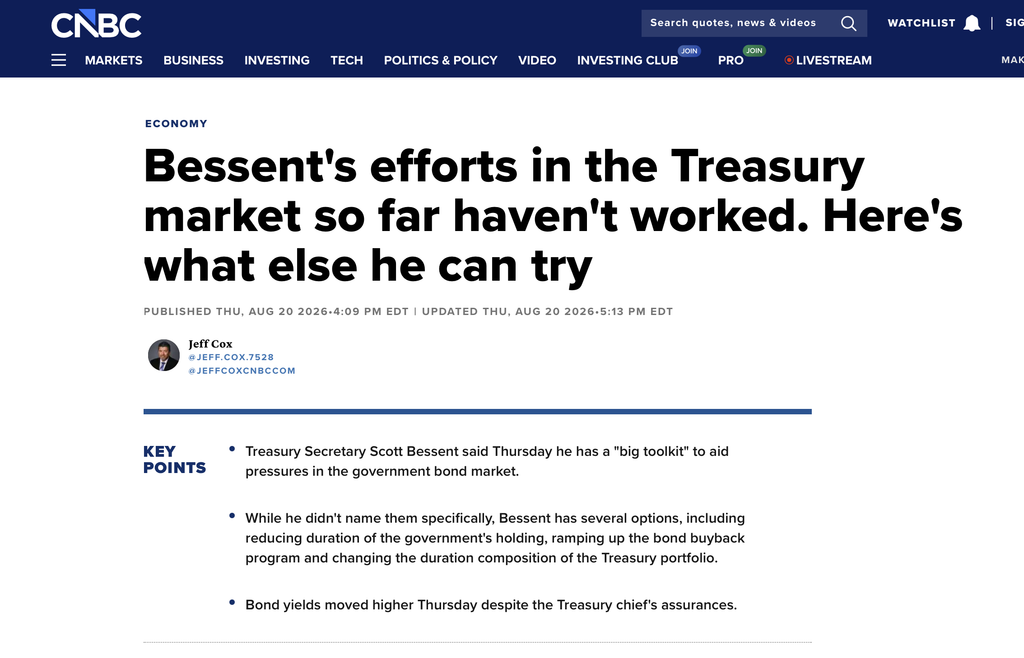
Basically, Bessent launched a bond buying scheme where the treasury would buy longer dated bonds in order to drive down long bond interest rates. Oh yeah, to raise the capital to buy the bonds he planned to sell short term bonds. This generated the comment about “paying your mortgage with a credit card.”
Interest Rates?
And speaking of interest rates, didn’t several of the fed governors suggest that due to inflation, we may need to think about raising interest rates??
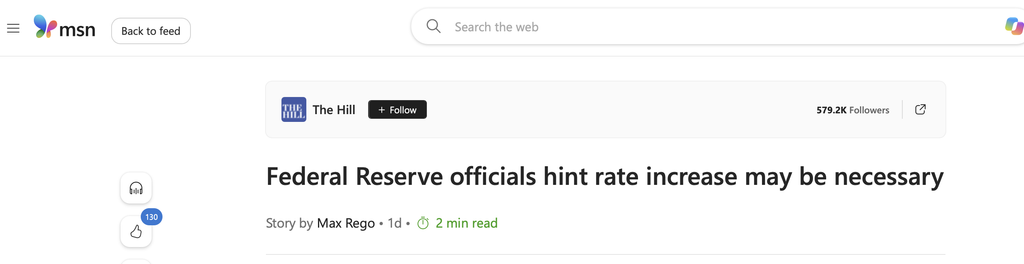
I thought I read that – check it out here.
So part of our government wants to raise rates and part wants to lower them?? How does that work?
The Case For Higher Rates
Higher rates mean that everyone pays more in loan interest. That means car loans and home loans, but the really big borrower is the US government. Every treasury bond bill and note sold is a loan to the government. Each one will need to be paid back at maturity, but we’ll pay interest until then. That’s the $1 trillion annual interest payment line item on the debtclock.
But as much as we hate higher rates, inflation is the result of too much money chasing too few goods. Basic supply and demand. Prices go up, and up, and up. The only fix we have is to reduce the money in the system. We do this by raising interest rates. Nobody likes it, but historically, this is the only way we’ve been able to control inflation.
The Case For Lower Rates
There are lots of reasons why lower rates are nice.
- Check out the debt clock. Interest on the 40 trillion debt is over $1 trillion every year. If interest rates were lower, the US interest payments would be lower and we could use that money for something productive. Of course better money management would also bring that number down. But lower rates will help the deficit even if it hurts us with inflation. Good tradeoff???
- Lower rates help the biggest borrowers. Aside from the government who takes huge loans? We’ll take a look next.
Biggest Borrowers
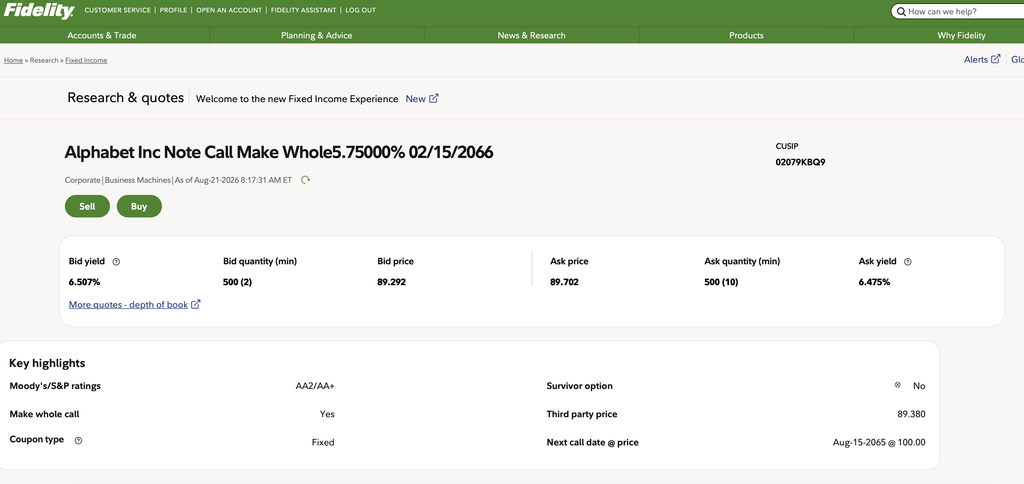
If you guessed corporations, you’d be right. Take a look at this.
And here’s the total amount of the bond

Let’s analyze this
This is a 40 year bond. It was issued in early 2026, and matures in 2066. Alphabet, the parent company of Google is a great company, but will it be around in 40 years?
In 1986, 40 years ago, American Can (really), Bethlehem Steel, Inco Limited, Sears Roebuck, Union Carbide, Woolworth and Westinghouse Electric were all part of the Dow Jones Industrial Index. They were part of the 30 companies that represented the US economy at the time. They are now defunct. Things change.
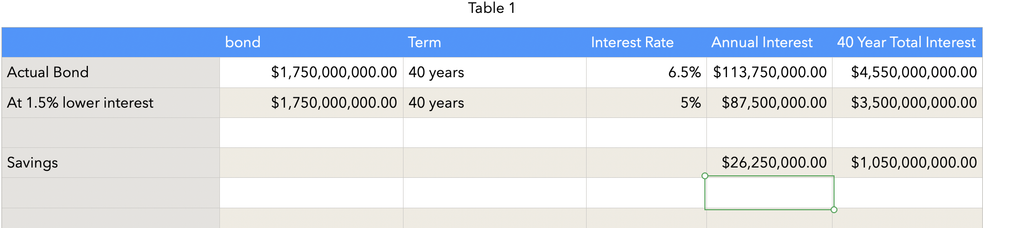
But back to the loan. Assuming Alphabet sticks around, They’ll get a cool 1.75 billion in cash for this bond offering. They’ll hire people, build data centers, invest in AI…
The bond pays about 6.5% per year so Alphabet needs to shell out $113 million each year to bond-buyers for the next 40 years. That’s a total of over $4billion.
But if we reduce the interest rate by just 1.5%, down to 5%, Alphabet can save over a billion dollars.
This is not Alphabet’s only bond. It has lots more. And every other company on the planet also issues debt to fund their growth.
Who Wins?
Lower interest rates make a huge difference for big borrowers like governments and companies. And while there are economists who will tell us that these benefits trickle down to the little folks, I’m not sure.
So big corporations, who benefit most from lower interest rates are pressuring our elected officials to lower rates. And elected officials and wealthy folks who own shares of corporations all want interest rates lower.
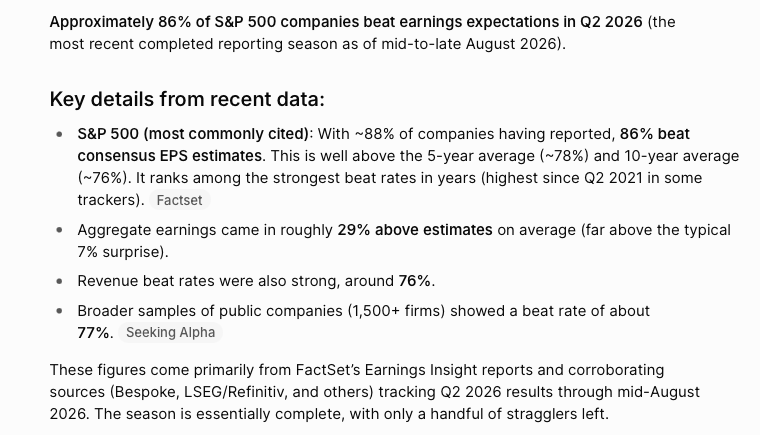
But even without lower rates, profits of publicly traded corporations are up big.
This past earnings season saw record corporate profits. Look what Grok had to say.
Who Doesn’t Win?
Everyone who is not invested in stocks or equity mutual funds.
For everyone who is angry about this, buy a share of an S&P 500 fund today. Get rich. That will show them.
Wrap Up
Sort of a long and winding road so let’s recap.
First of all, despite Bessent’s quote that
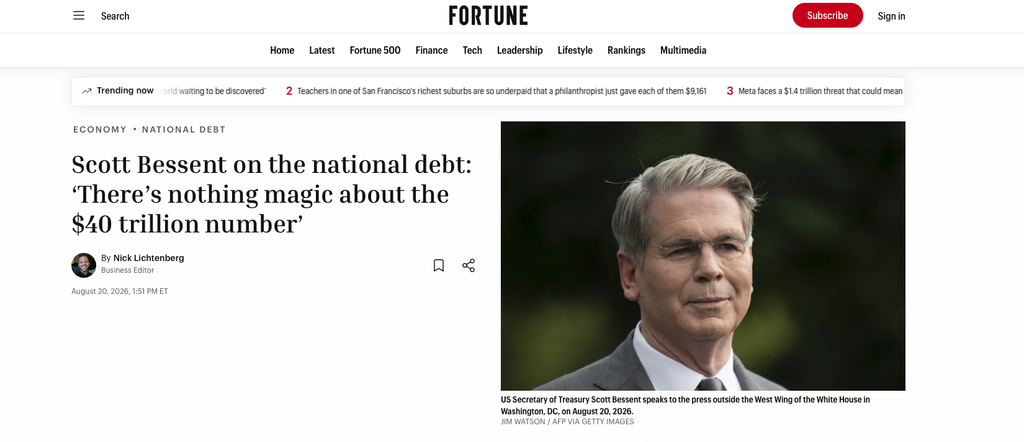
I’d personally prefer that the treasury secretary take this a little more seriously. The deficit was not given to this administration by Biden. While the Biden administration did a fine job growing the debt, so did Trump1, and Obama 1 & 2.
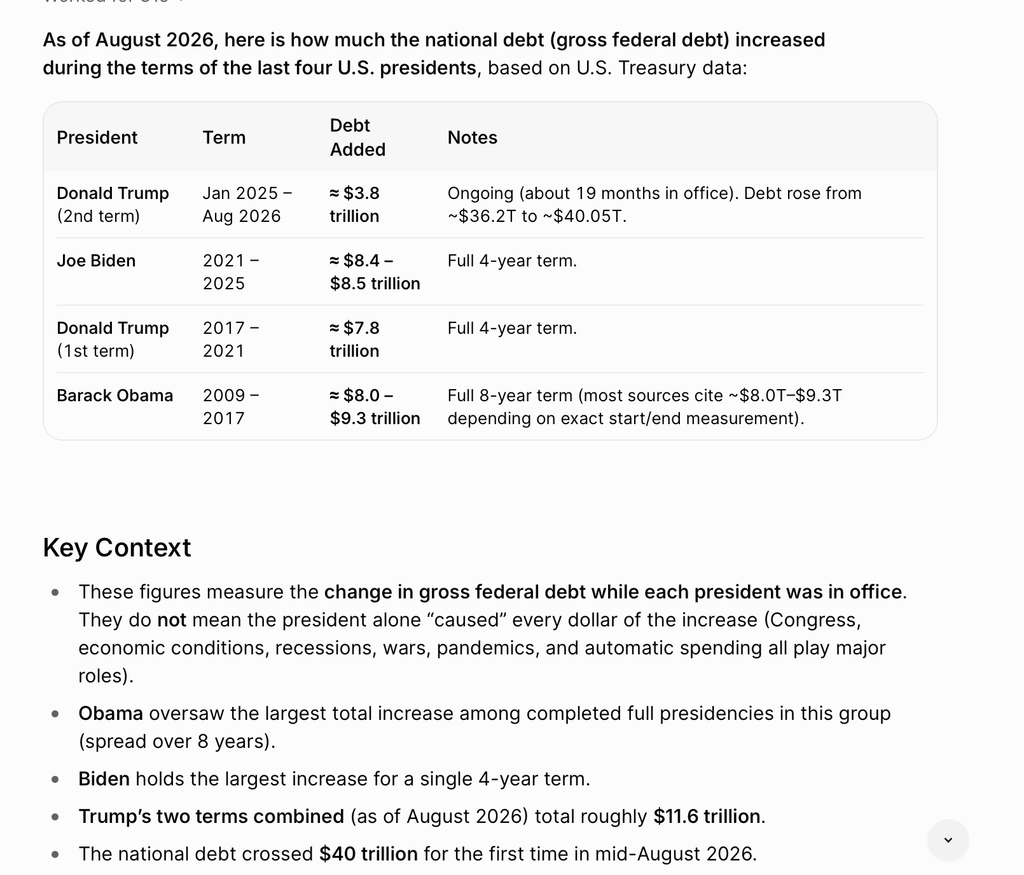
So to point 1, the national debt, $40 trillion is significant to me because it’s a really big number and we are continuing to add to the debt every year. And the debtclock tells us that the difference between our tax revenue and our spending is about $2 trillion per year. And if you’ve done a budget, you know that when your spending exceeds your income, your debt grows.
Point 2 is more nuanced. It seems that our elected official’s priorities align more closely with business (and their own pocketbooks) than ours. This may sound a bit jaded, but…
Even if we don’t bring interest rates down and save the corporations billions of dollars, they seem to be doing pretty well.
So to me, if corporations are thriving and the government seems to be doing its best to help them, wouldn’t it be smart for us to participate in those profits?
And I’m not talking about cashing out our emergency fund and putting it all into stocks. Take a few dollars – money we don’t need for groceries, our rent or mortgage or for tuition next year, and buy a few shares of a nice low-cost S&P 500 fund.
The rich are getting richer because of corporate profits. An S&P 500 is a nice way for us to join in.
Good luck.